Integrating Culture into Sustainable Development: SDGWG Webinar Series
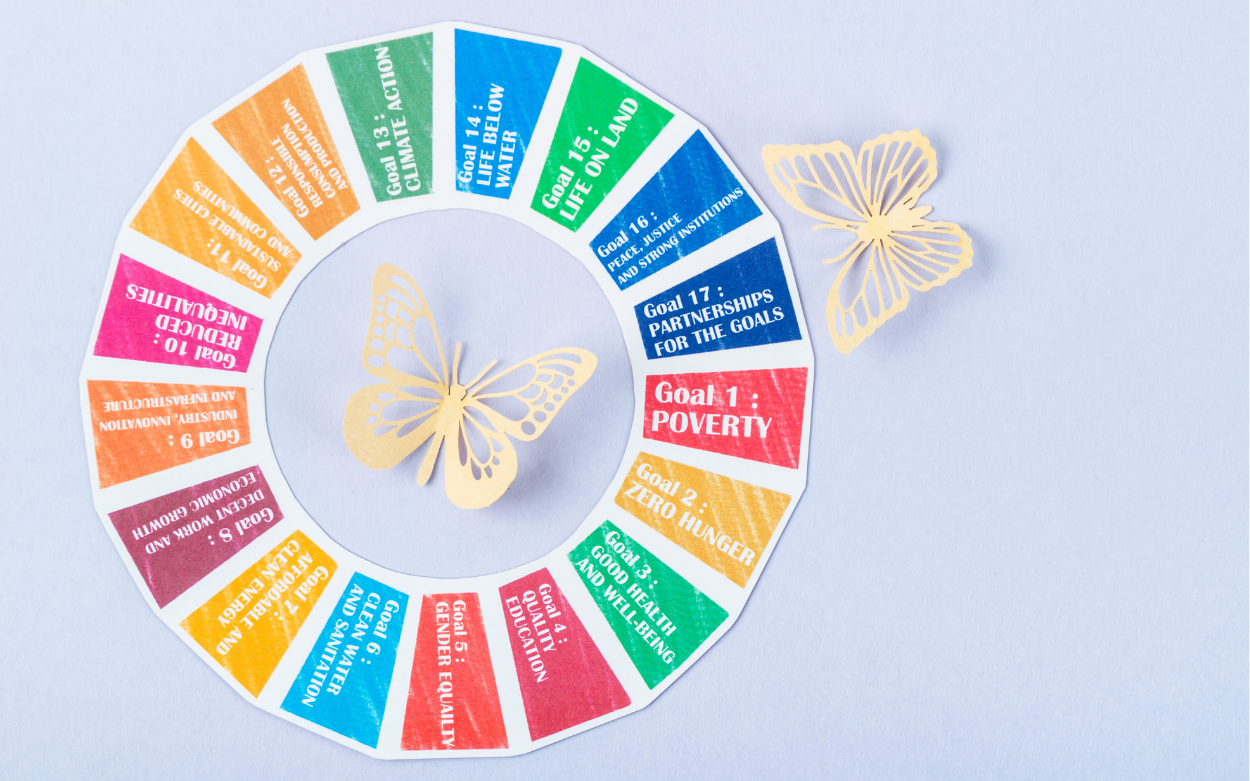
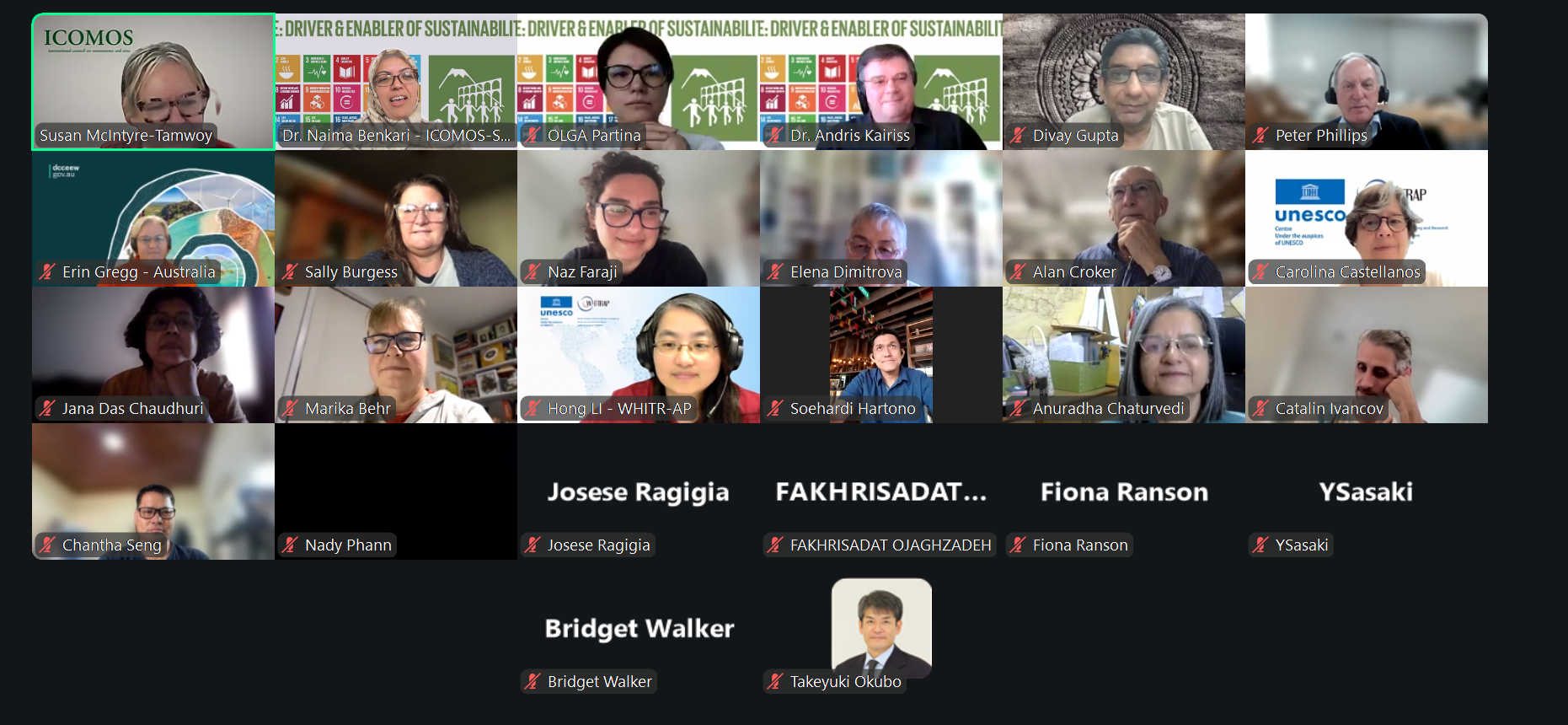
Between May and July 2026, the ICOMOS Sustainable Development Goals Working Group (SDGWG) organised a regional webinar series entitled “Integrating Culture and Cultural Heritage into Sustainable Development.” The webinars brought together National Committees and practitioners from across the globe for a period of strategic learning, discussion, and practical engagement.
Building sustainability literacy for the heritage sector
The SDGWG hosted this webinar series to bridge a critical policy gap: while cultural heritage drives local resilience, identity, and social cohesion, it remains nearly invisible within the United Nations 2030 Agenda, named explicitly only in SDG Target 11.4. Consequently, invaluable heritage achievements are frequently omitted from public funding and policy decisions because they lack structured, results-oriented reporting.
The training series was designed for ICOMOS members and heritage professionals to support the global #Culture2030Goal campaign. It provided participants with standardized reporting toolkits, namely the Mapping Template and the Structural Framework for Voluntary National Review Culture Subchapters. In practice, these tools helped translate qualitative local field data into report-ready quantitative evidence.
The webinar series engaged a wide range of stakeholders, including:
• ICOMOS National Committees
• Heritage practitioners and conservation experts
• Academic researchers and higher education institutions
• Local governance and municipal authorities
• Regional leadership and international coordinators
A global programme
The multi-month programme featured dedicated regional sessions led by experts and focal points to address specific local realities and toolkit implementations.
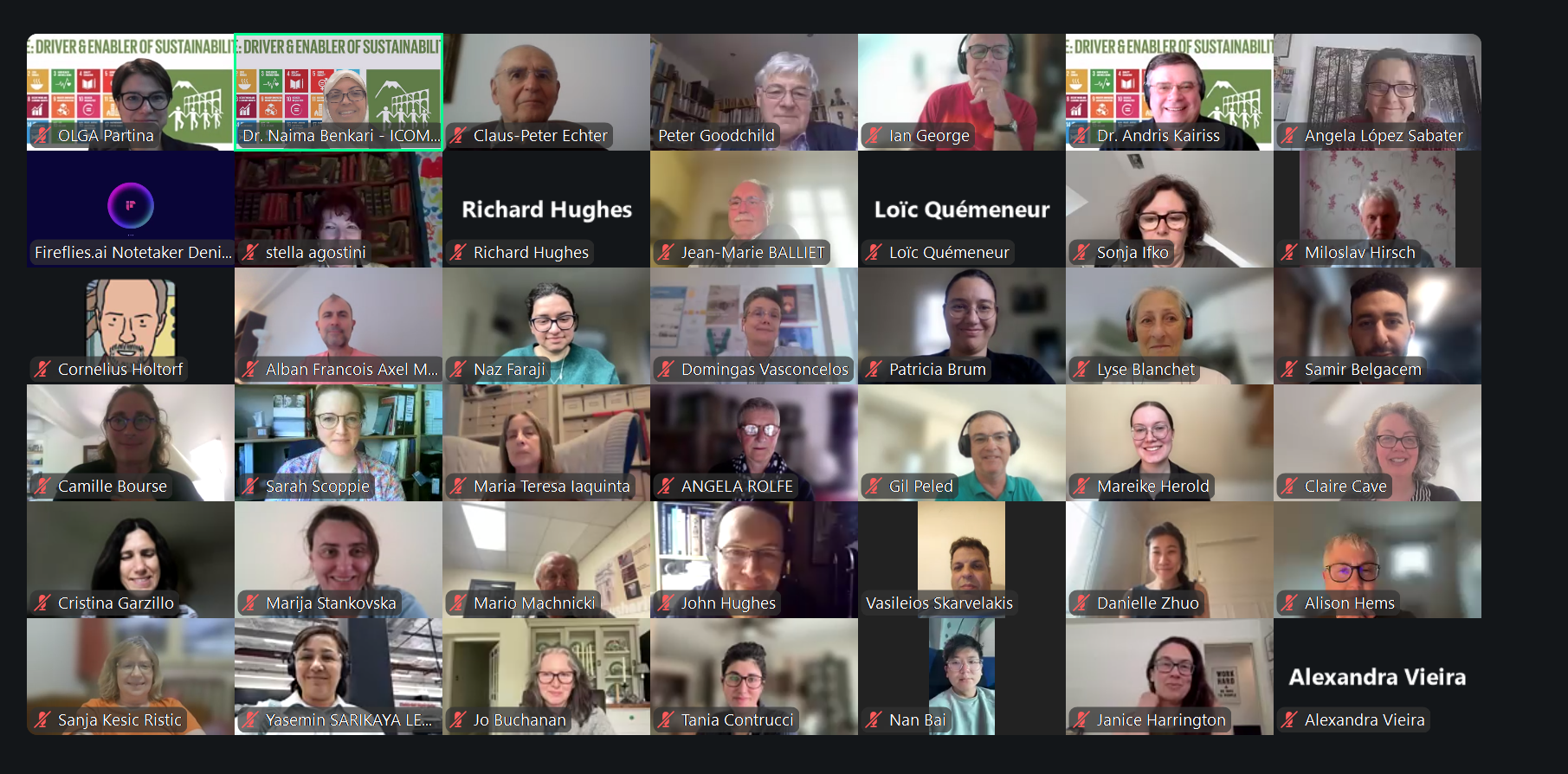
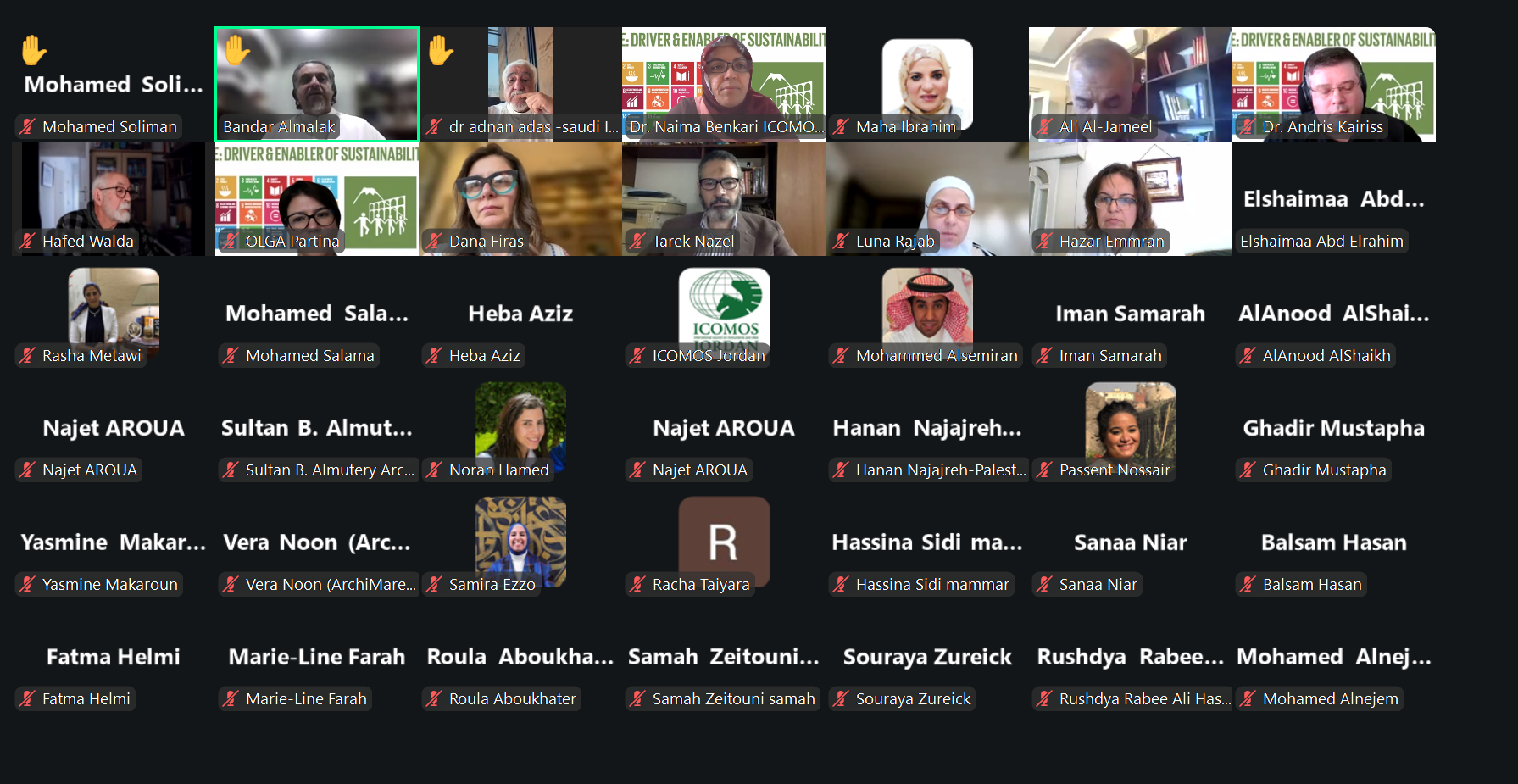
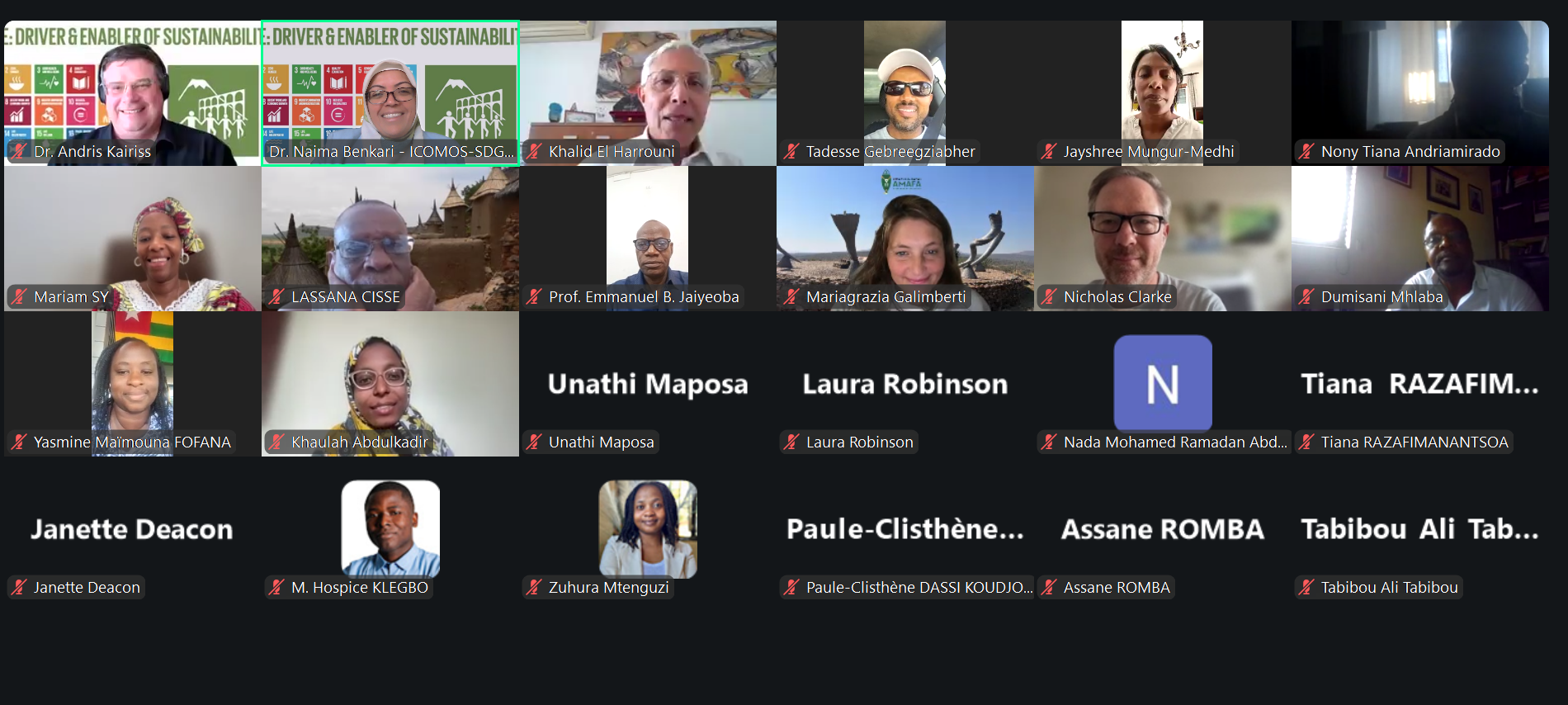
Across the Arab States, Europe and North America, Africa, and the Asia-Pacific, these webinars mobilised local networks to translate global sustainability frameworks into practical heritage tools.
In the Arab States and Africa, participants focused on technical and linguistic localisation (including Arabic and French translations) while establishing direct coordination with national authorities to integrate structured heritage subchapters into upcoming Voluntary National Reviews (VNRs).
Meanwhile, sessions in Europe, North America, and the Asia-Pacific aligned global reporting templates with localised conservation debates. Discussions in these regions examined how to measure qualitative cultural values within quantitative UN frameworks. They also demonstrated how place-based, traditional, and indigenous knowledge acts as vital technology for modern climate adaptation and community resilience.
Together, these regional workshops successfully prepared diverse global committees to structurally prove that culture is an indispensable driver of sustainable development.
The webinar programme unfolded in sequences guiding participants from high-level strategy to localised execution across five sequential segments.
Webinar Structure
The sessions started with a focus on Welcome and Strategic Alignment. This set the stage for regional cooperation and clearly defined the SDGWG’s identity as a strategic policy laboratory. Led by the relevant ICOMOS regional Vice President and Dr. Naima Benkari (ICOMOS-SDGWG Focal Point), this introductory segment highlighted how global networks can effectively transition qualitative field expertise into policy-ready evidence.
UN Context and Open Source Reporting Resources
Building on this foundational alignment, Olga Partina (ICOMOS-SDGWG Steering Committee Member) then addressed UN Context and Standalone Culture Goal Advocacy. Her presentation deeply analysed the UN SDG architecture, Voluntary National Reviews (VNRs), and Voluntary Local Reviews (VLRs). By directly addressing current gaps in cultural representation within the SDGs, she outlined the global advocacy efforts pushing for a standalone “Goal” which aims to ensure cultural sustainability for the well-being of all.
With the policy context established, the webinar transitioned into a practical phase: a Tools Demonstration by Dr. Andris Kairiss, (ICOMOS-SDGWG Tool Developer). This segment featured a live walk-through of two newly introduced open-source reporting resources. Dr. Kairiss offered hands-on instruction on how to utilize the Structural Framework, which serves as a guide for drafting VNR and VLR subchapters. He also introduced the Mapping Template, an interactive matrix designed for rating and describing the specific SDG contributions of local heritage projects.
Recognising that global tools must adapt to diverse operational landscapes, Dr. Farnaz Farraji, the SDGWG Communications Coordinator, presented the Technical App and Translation Localisation. She opened up the technical backend to showcase the platform’s user design, accessibility features, and strict user privacy protocols. Furthermore, Dr. Farraji demonstrated how the platform generates local PDFs and highlighted ongoing efforts to translate the framework into major global languages, including Arabic, French, Spanish, Chinese, Bengali, and Hindi.
Gathering Participant Feedback : Regional Implementations
The intensive training culminated in an Interactive Consultation and Q&A. For this final segment, the ICOMOS-Regional Vice presidents and Dr. Naima Benkari returned to moderate a dynamic open forum. This final segment was dedicated to gathering participant feedback and mapping out the immediate next steps for regional implementations. Attendees actively discussed practical integration strategies, such as aligning these new tools with existing local guidelines (e.g. UCLG local action frameworks). They also explored integrating GPS data into reporting and establishing meaningful collaborations with national ministries to ensure long-term impact.
Way Forward
Overall, the global training series reflects the growing commitment of the ICOMOS network to strengthen sustainable development literacy across the heritage profession. Moving forward, the SDGWG urges National Committees to :
- designate dedicated SDG contacts,
- engage with national ministries, and
- deploy these tools to formulate report-ready subchapters for the upcoming UN review cycles.
Looking ahead, the SDGWG plans on delivering the same material in a live workshop at the ICOMOS Triennial General Assembly in October 2026.