Conclusion of the Climate Literacy Training in France
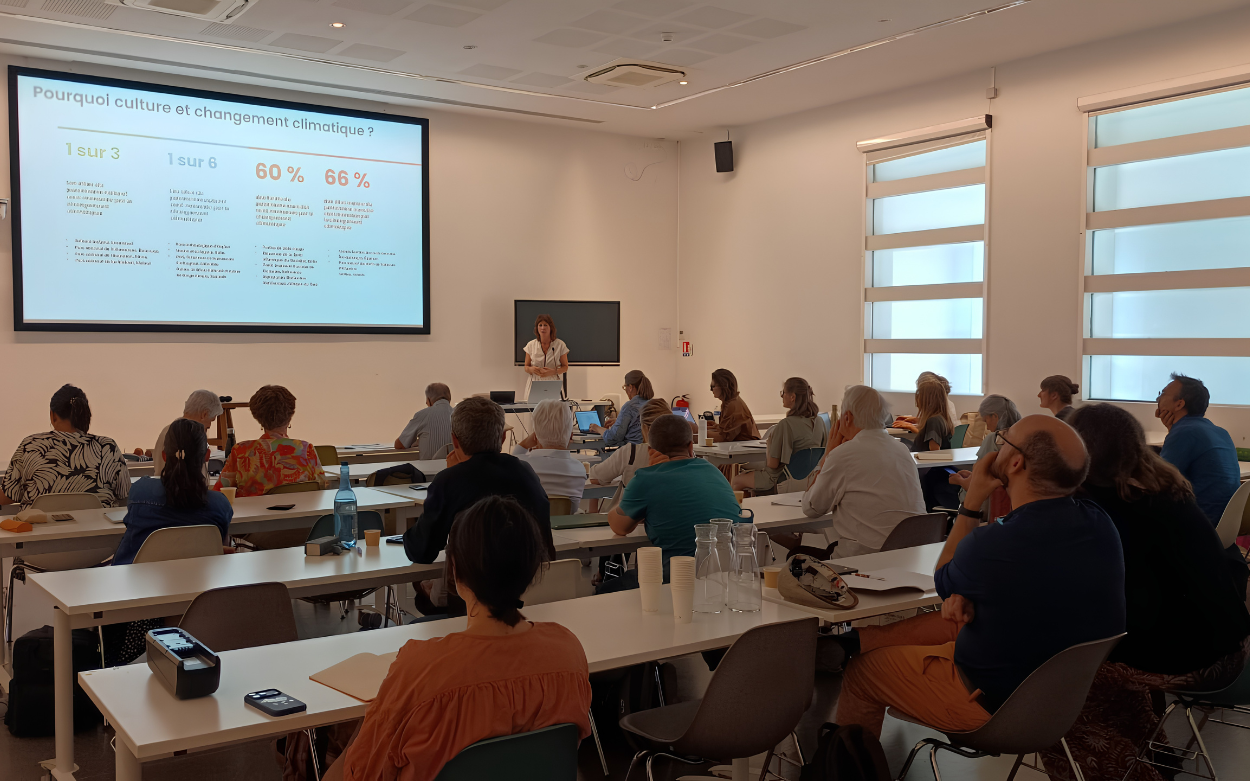
On 1 July 2026, ICOMOS France organised a Climate Literacy Training for Heritage in Paris. The event brought together participants from across the heritage sector for a day of learning, discussion and practical engagement.
Building climate literacy for the heritage sector
ICOMOS France hosted this Climate Literacy Training at the École de Chaillot in Paris. The programme was based on the Climate Action Working Group (CAWG) training resources developed through the Preserving Legacies project, thus providing participants with the knowledge and practical tools needed to respond to the growing impacts of climate change on heritage.
The training was designed for ICOMOS members and heritage professionals. It examined both the threats that climate change poses to cultural heritage and the ways heritage can support climate mitigation and adaptation. In addition, the programme combined the latest publications from the IPCC, UNESCO and ICOMOS with practical case studies and collaborative discussions.
The event reached its maximum capacity with 30 participants, including:
- heritage architects
- conservation professionals
- researchers
- museum and heritage managers
- urban planners
- public officials
- sustainability specialists
- craftspeople
- representatives from national and international organisations.
About the programme
The one-day programme featured three complementary modules led by experts from leading heritage and research institutions.
The first module was presented by Ann Bourgès (Centre for Research and Restoration of the Museums of France – C2RMF). She introduced the scientific foundations of climate change. Participants learned about the difference between weather and climate, greenhouse gas emissions and IPCC climate scenarios. They also explored the wide range of climate hazards affecting cultural heritage. The session examined how climate impacts can range from gradual deterioration to sudden extreme events.
The second module was delivered by Ning Liu, architect, urban planner and co-founder of Building for Climate. It focused on carbon emissions in the heritage sector. Participants explored international climate policies, tourism-related emissions, museum operations, conservation practices and organisational carbon footprints. They also learned how to map emissions and identify opportunities to reduce them. In addition, the session introduced the concept of “loss and damage” in relation to irreplaceable cultural heritage.
The final module was led by Julie Desarnaud (Royal Institute for Cultural Heritage – KIK-IRPA / ICOMOS Wallonia-Brussels). This session shifted the focus from understanding climate risks to taking action. Heritage risk assessment methods, climate justice principles, traditional approaches, nature-based solutions and circular economy were discussed. All in all, the session addressed the challenges and opportunities of balancing heritage conservation with renewable energy and sustainable development.
The Paris training reflects the growing commitment of the ICOMOS network to strengthen climate literacy across the heritage profession and supports the educational resources developed by the ICOMOS Climate Action Working Group.