Preserving Legacies: Publication of Angkor, Koutammakou and Cartagena Risk Assessments Reports
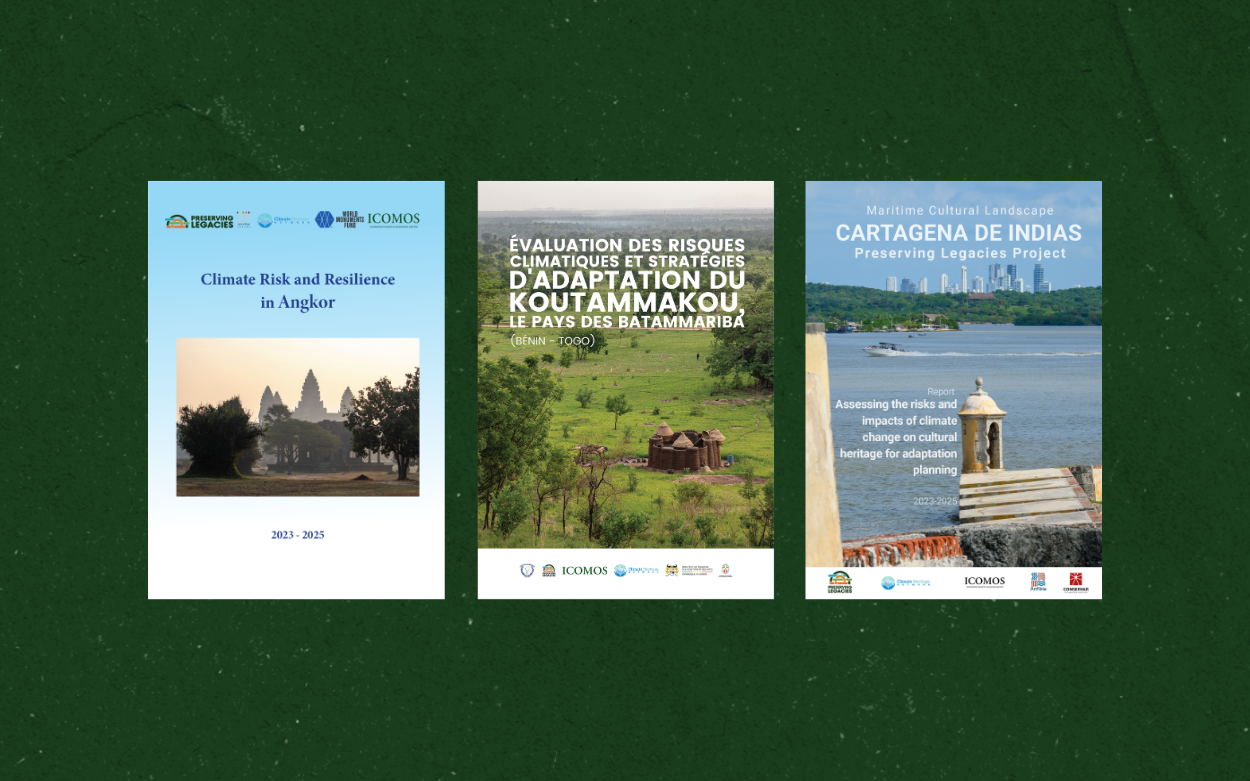
The Preserving Legacies team, in collaboration with ICOMOS, international partners and local authorities, has published Climate Risk Assessment reports related to three of the project’s adaptation sites. Angkor Wat (Cambodia) is facing drought hazards, while Koutammakou (Benin, Togo) and Cartagena de Indias (Colombia) are fighting risks associated with extreme heat and sea level rise.
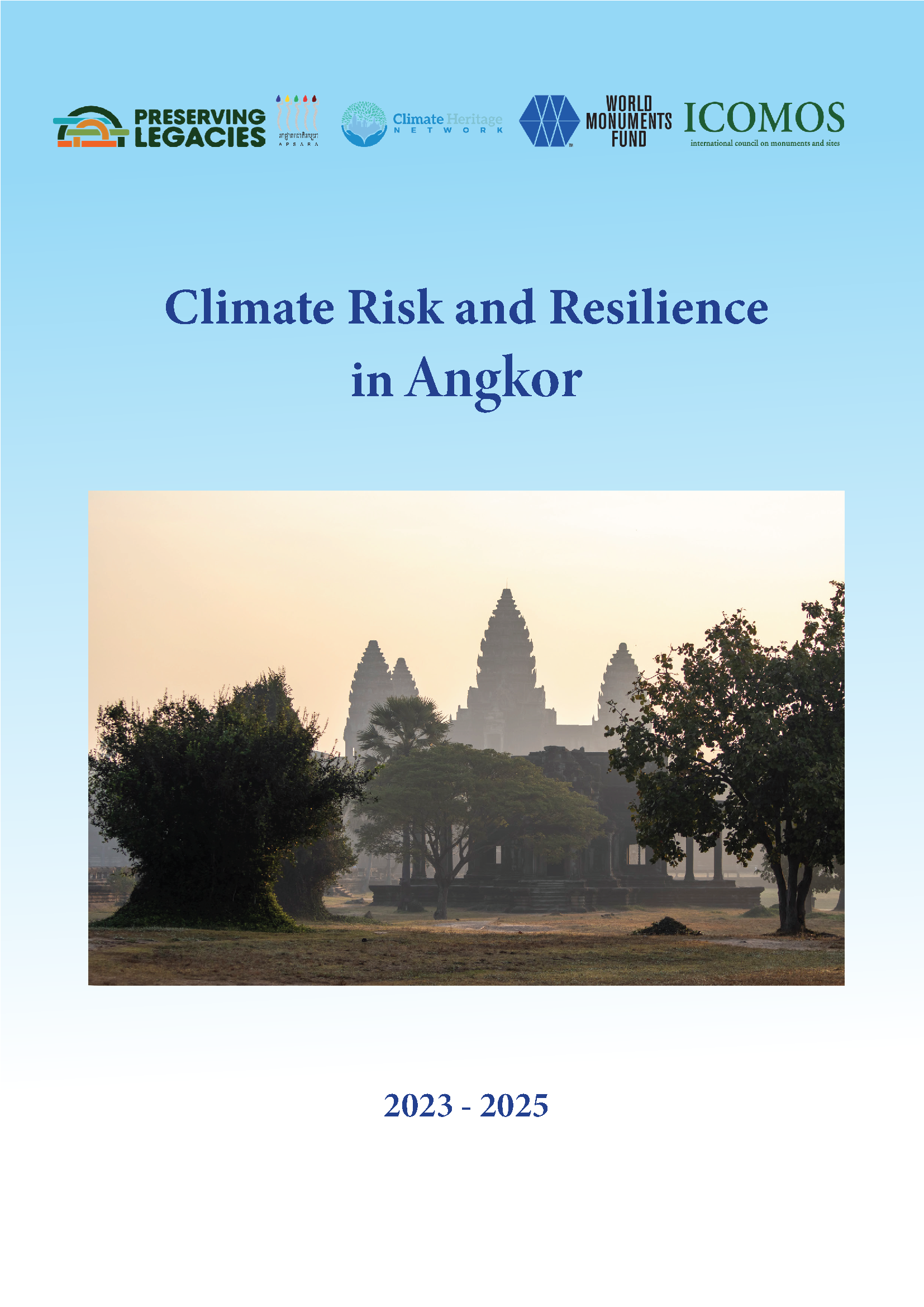
Climate Risk and Resilience in Angkor
The publication highlights the escalating environmental threats facing the Angkor Archaeological Park, Cambodia’s premier UNESCO World Heritage site.
The authors identified a number of risks to Angkor, including rising temperatures, dry season droughts, biological growth and erratic rainfall.
The risk assessment consequently outlines a resilience strategy that pairs modern technology with traditional knowledge and ancient practices to address these climate hazards.
Examples include:
- Restoring the park’s historically resilient water systems while integrating monitoring techniques.
- Using high-tech tools like 3D photogrammetry to assess and monitor temple foundations.
- Employing the traditional method of anastylosis (dismantling and precisely rebuilding stone blocks).
- Restoring structures using traditional materials.
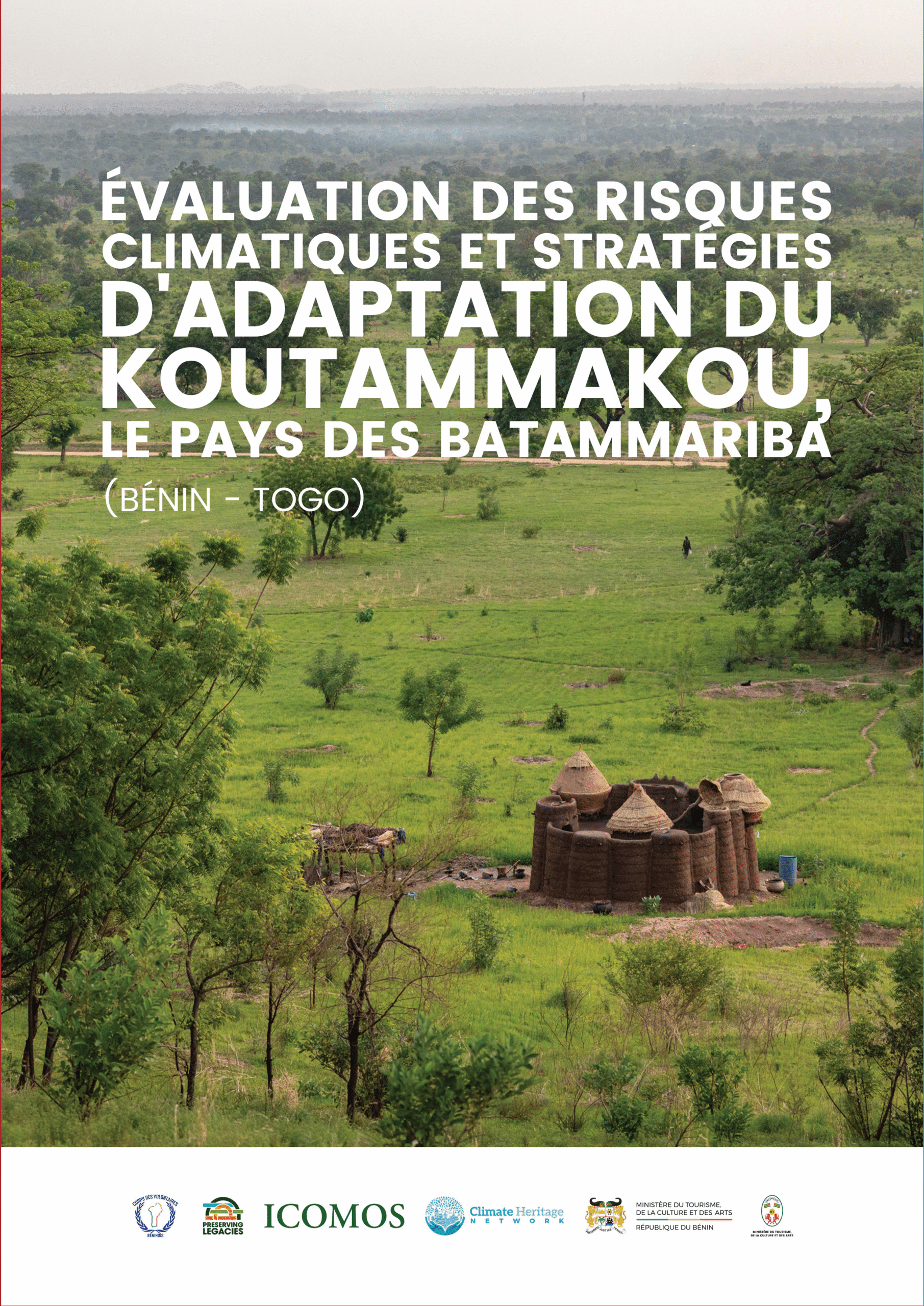
Climate Risk Assessment of the Koutammakou Site, the Land of the Batammariba (Benin and Togo
Climate change is now one of the main risk factors for the conservation of Koutammakou’s cultural landscape. Indeed, projections for the 2080 horizon show an intensification of temperatures, droughts and extreme rainfall events which could durably compromise several attributes of the property’s Outstanding
Universal Value.
The proposed adaptation strategy rests on 10 priorities for immediate action, as well as an integrated biocultural resilience approach combining :
- the conservation of built heritage,
- the safeguarding of intangible heritage,
- ecosystem restoration,
- the strengthening of livelihoods,
- adaptive governance, and
- the mobilisation of art as a vector for awareness-raising, transmission and social transformation.
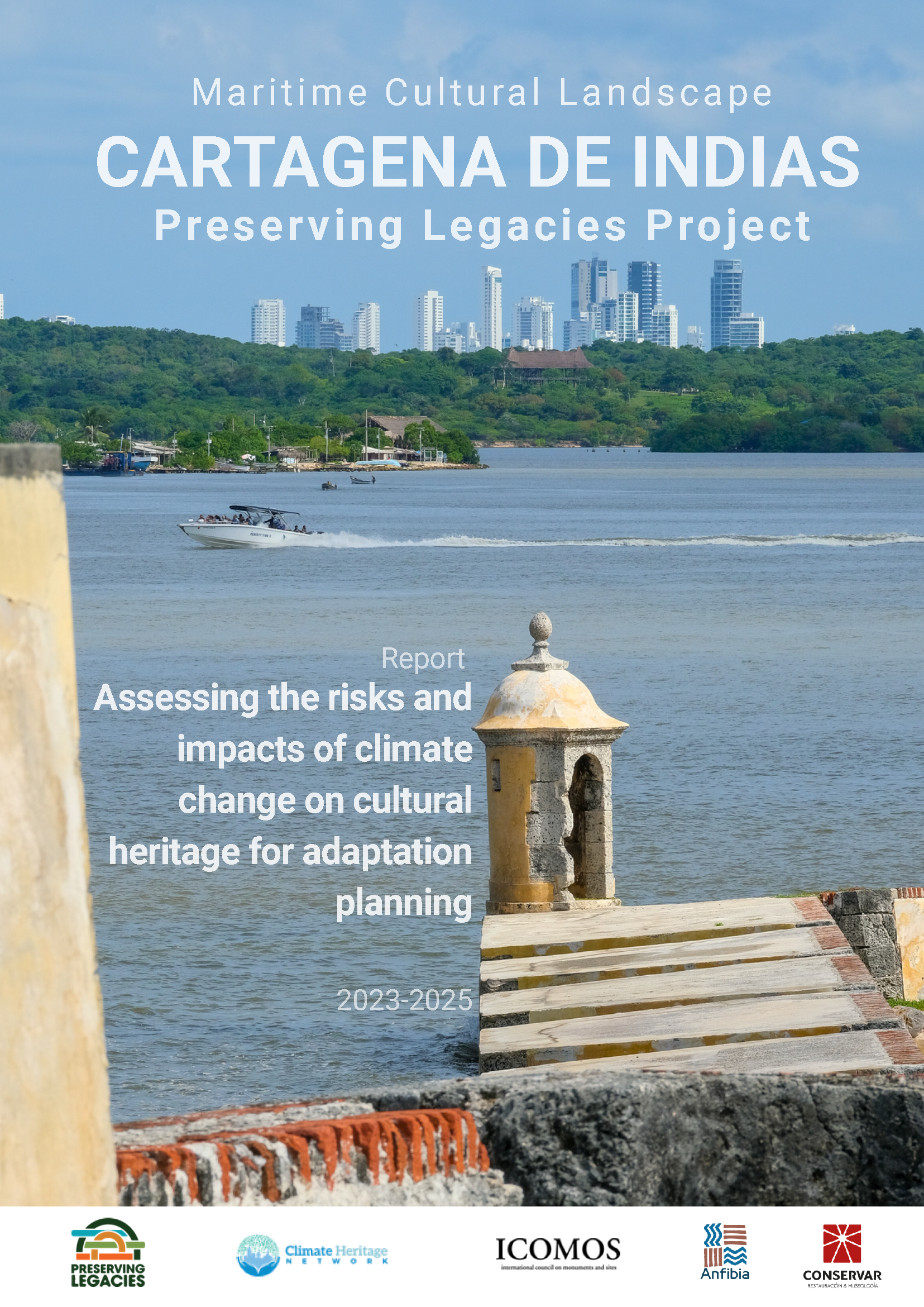
Cartagena de Indias / Assessing the risks and impacts of climate change on cultural heritage for adaptation planning
Rising sea levels and other climatic phenomena (such as threats posed by heat waves,
storm intensification and extreme rainfall) are irreparably affecting not only the heritage sites but also the intangible cultural traditions of local communities in Cartagena.
Existing resilience and adaptive capacity include:
- long-term community observation,
- traditional fishing knowledge,
- local monitoring,
- mangrove planting,
- coral restoration,
- resistance in defence of territories and livelihoods, and
- sustained practices of care.
These capacities specifically informed proposed adaptation pathways for the Cartagena sites of Tierra Bomba and the Rosario Islands, involving coral and mangrove nurseries and planting, the restoration of ancestral vegetation, green corridors, climate literacy, and community-based monitoring. Additionally, further proposals addressed the documentation of heritage at risk, underwater preservation, sustainable fishing and agriculture, and the inclusion of cultural heritage in territorial planning.