Implementation of a National Cultural Heritage Inventory in the DRC
Years : 2020 - 2024This two-phased project aimed to support heritage professionals in the Democratic Republic of Congo (DRC) to create a sustainable national cultural heritage inventory. Such an inventory is essential for preserving the historical and cultural values of the country’s heritage, ensuring their protection and transmission to future generations.
The first phase focused on capacity building through a comprehensive workshop that trained 29 Congolese cultural heritage professionals. Participants gained essential knowledge and methodologies for developing and managing a national inventory of cultural heritage. This workshop was conducted by ICOMOS in collaboration with the National Advisory Committee for the Protection of Cultural Property in the Event of Armed Conflict (CCN) of the DRC.
In the second phase, a Scientific Committee was established by CCN to oversee and coordinate the inventory process in DRC. Additional on-site missions to Kinshasa, online mentoring workshops, and extended training in Mbanza Ngungu trained 31 more heritage professionals. Those trained in Phase 1 also received advanced training to become trainers themselves, ensuring the sustainability of the inventorying process.
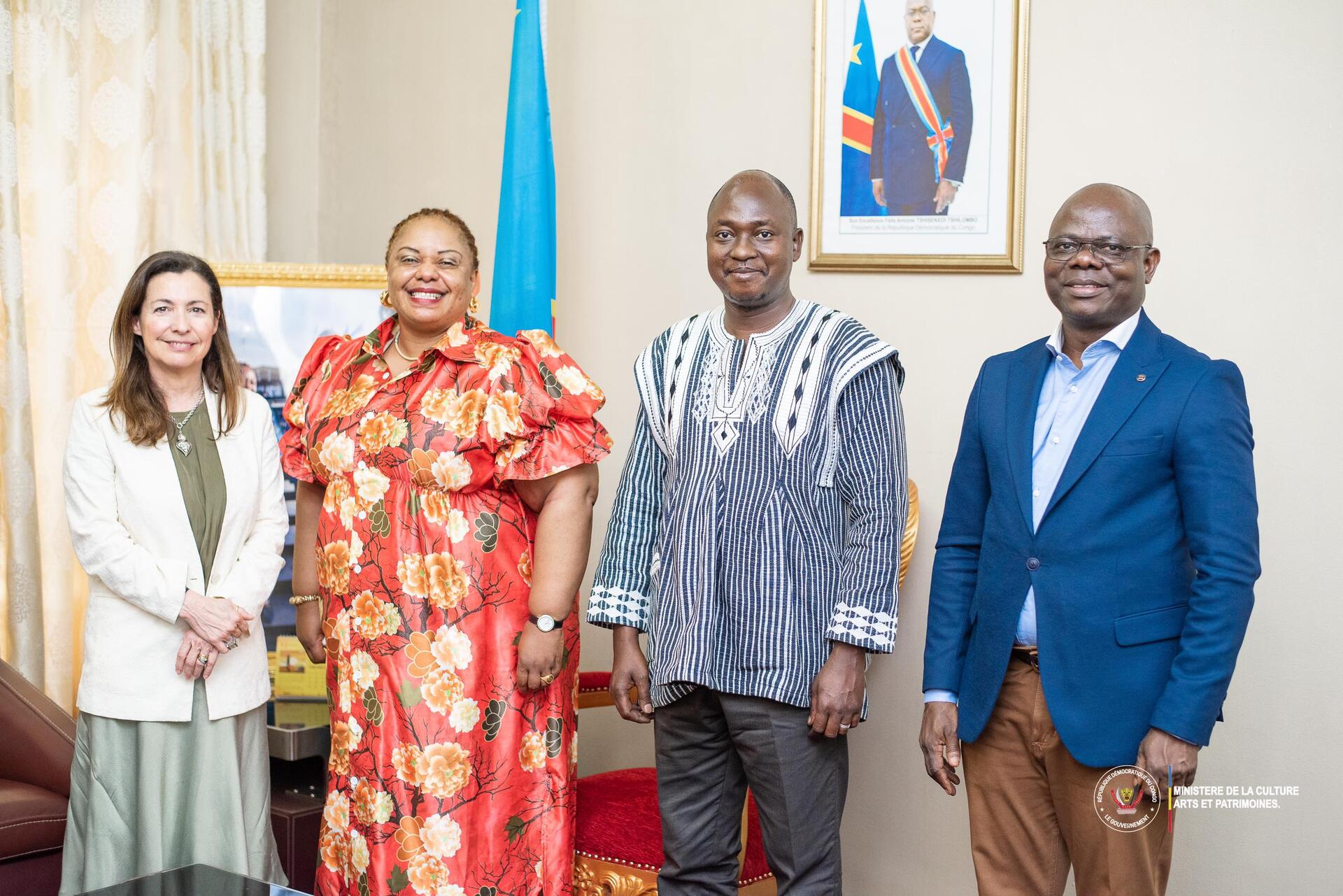
The ICOMOS expert team, led by ICOMOS President Teresa Patrício and cultural heritage inventorying expert Boussad Aiche (Algeria), developed tailored methodological tools for the inventory, including a descriptive system, thesaurus, glossary, and inventory sheets. A total of 49 cultural heritage properties were inventoried during the training sessions. Alongside capacity building, ICOMOS expert Bély Hermann Abdoul-Karim Niangao (ICLAFI, Burkina Faso) revised and provided recommendations for amendments to DRC’s national heritage legislation. The ICOMOS expert team has also produced a series of recommendations for the future successful continuation of the national cultural heritage inventory in DRC, submitted to the national authorities.
The project was supported by ALIPH, with additional contributions from the Ministry of Culture of the United Arab Emirates during Phase II.