Call for Applications: Capacity Building Programme for Climate-Resilient Earthen Architecture in Africa
Related events
See all eventsThe International Council on Monuments and Sites (ICOMOS) and the ICOMOS National Committee of Burkina Faso, with the support of the International Alliance for the Protection of Heritage (ALIPH), are jointly organising a regional training on the conservation of earthen architecture in the face of climate change challenges.
Africa’s rich cultural heritage is increasingly threatened by climate change. Floods, storms, droughts, and erosion pose significant risks to built heritage, especially earthen architecture. Moreover, many African heritage sites, particularly those made of earth, lack clear conservation policies and preventive risk-management strategies. As a result, they remain vulnerable to irreversible damage.
In this context, heritage professionals must be sufficiently equipped with the appropriate knowledge, methodologies, and tools. Only then can they take sustainable, concrete, and effective measures to confront — and even prevent — the impacts of climate change on their heritage.
ABOUT THE CAPACITY BUILDING TRAINING PROGRAMME FOR CLIMATE-RESILIENT ARCHITECTURE IN AFRICA
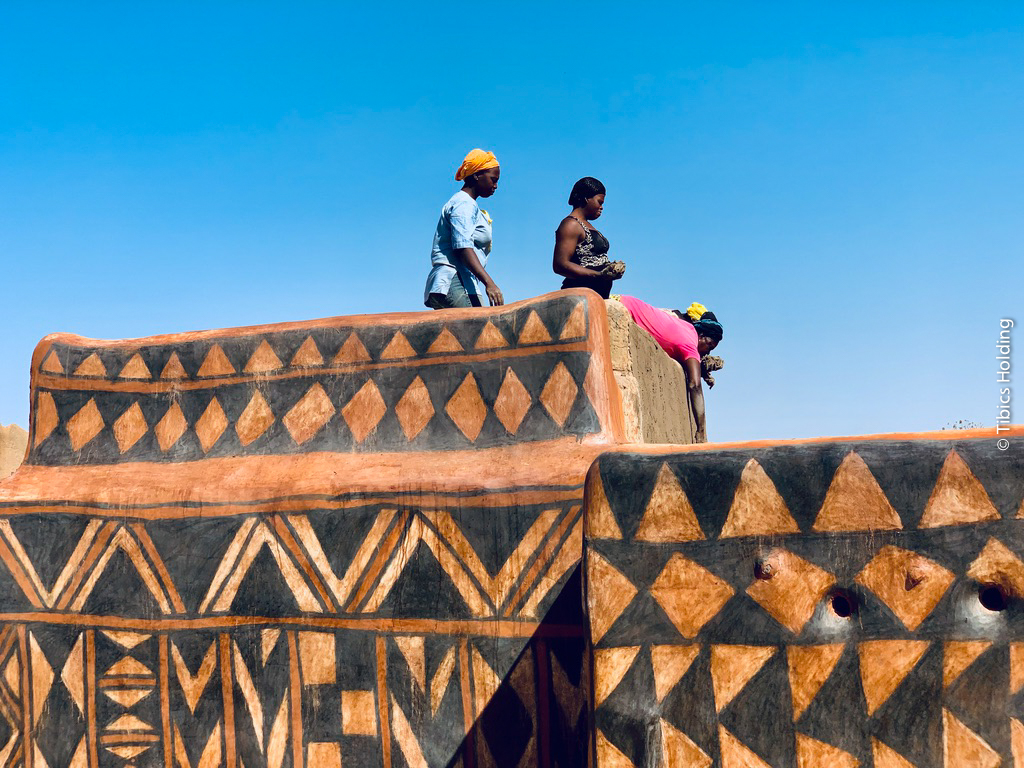
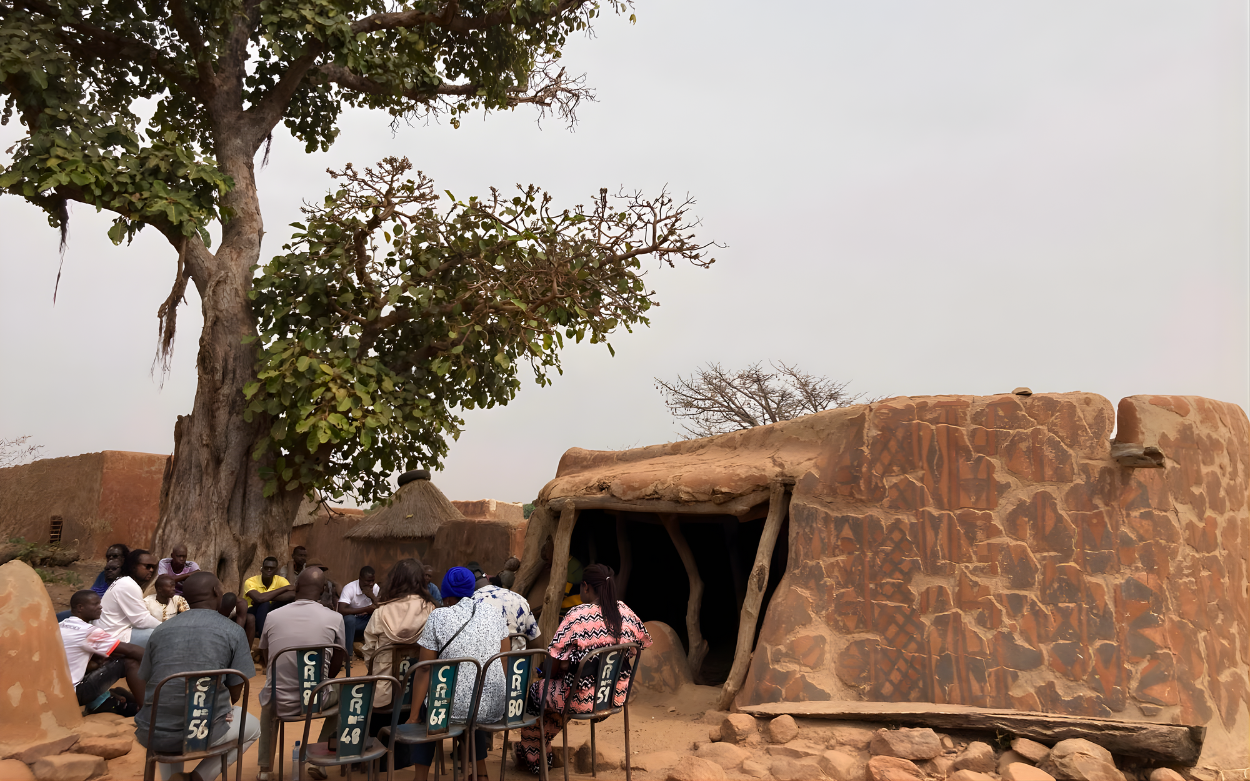
To respond to these challenges, ICOMOS and ALIPH will be holding an eight-day training, which will take place on a date to be defined between 05 and 11 May 2026. It is to be held in Burkina Faso, at the Royal Court of Tiébélé, a site recently inscribed on the World Heritage List and exposed to risks of climate change.
Given the complex interaction between climate change and heritage, the training will cover complementary issues at the heart of the challenges posed by climate change for the conservation of earthen architectural sites.
In addition, participants will benefit from a programme that blends theoretical and practical sessions related to heritage conservation under climate pressure.
ICOMOS will ensure that the training effectively meets the needs of heritage actors from Burkina Faso and other African countries. Furthermore, it will support the sustainable transmission of the knowledge required to protect earthen built heritage from the harmful, multifaceted impacts of climate change in Africa. The aim is to strengthen the competencies of African heritage professionals so they can better meet the challenges that climate change poses to their earthen built heritage.
GOALS AND OBJECTIVES OF THE PROGRAMME
The programme aims to develop participants’ skills for greater climate resilience through:
- a deeper understanding and management of climate risks,
- improved preparedness for climate-induced emergencies and disasters, and
- sound practices for conserving earthen architecture.
At the end of the training, candidates will be able to:
- Better define conservation needs for earthen architecture sites facing climate change challenges;
- More proficiently apply methods and tools for conserving earthen architecture sites;
- More accurately assess climate risks threatening earthen architecture;
- React more effectively in climate-related emergency and post-disaster situations;
- Disseminate methodological conservation principles within their own institutions upon completion.
PRACTICAL INFORMATION
Transportation expenses for participants will be covered between their place of residence and the training venue, only if participants attend the full eight-day training. The organisers will also provide lodging and meals on training days, under the same conditions. French and English will be the working languages.
No registration fee is required.
This call for applications is open to early and mid-career professionals from African countries, involved in the conservation of earthen built heritage. Moreover, women and individuals from under-represented groups are strongly encouraged to apply.
Candidates must have at least three (3) years of professional experience in earthen architecture, heritage, climate change, and/or disaster risk management, if possible at a World Heritage site.
SELECTION OF PARTICIPANTS
Application dossiers must include the following items (Prepared in advance by the candidate; documents can be uploaded by taking a photo directly via the platform):
a. A motivation letter, in English or French, describing why the candidate wishes to attend the training (maximum 750 words, PDF, JPEG, JPG, or DOC;
b. An employer’s certificate or any other document verifying your professional status;
Required documents (PDF, JPEG, JPG, or DOC):
Employees: employer’s letter approving participation.
Consultants / self-employed: signed letter indicating your professional identity (VAT number or national identification number).
c. A concise CV, in English or French, summarising the professional career, qualifications and current position (maximum 250 words, PDF, JPEG, JPG, or DOC PDF format).
As part of the application process, candidates must confirm their commitment to attend the full eight (8) -day training if selected by ticking a mandatory checkbox in the application form.
Applications must be submitted by filling out the online form no later than March 15 2026 at 23:59 CET.
25 participants will be selected based on the quality and relevance of the applications, while ensuring geographic and gender balance. Candidates will be notified no later than ten (10) days after the application deadline whether their application has been accepted or rejected.
If you have any questions, please feel free to contact projects[at]icomos.org.